
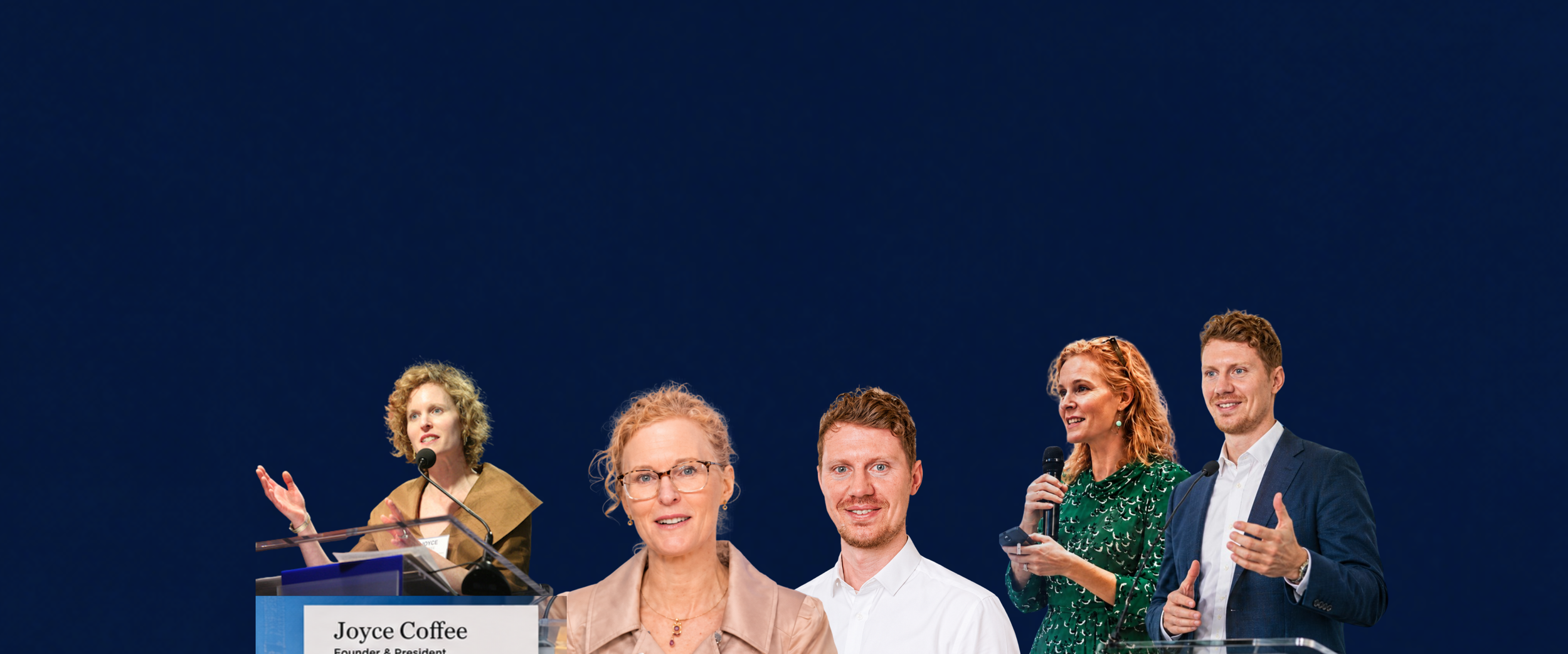
Meet Our Climate Resilience Experts

Joyce Coffee,
President & Founder · Climate Resilience Consulting
B.S. Biology, Environmental Studies & Asian Studies, Tufts · M.C.P. City Planning, MIT
Joyce Coffee is a nationally and internationally recognized leader in climate adaptation who has been shaping the field for three decades. As founder and president of Climate Resilience Consulting (CRC), the first U.S. consultancy built exclusively to operationalize climate resilience, she has helped move climate resilience from the margins to the core of public policy, finance, public health, and community development.
Joyce is known for groundbreaking transformative work: architecting Chicago's first municipal climate adaptation strategy, co-creating the Global Adaptation Index (ND-GAIN), and advising governments and financial institutions worldwide. She founded CRC because she saw what happens when resilience is a side note, it gets deprioritized. At CRC, resilience is the only focus. The firm has worked with communities, corporations, nonprofits philanthropies, and governments across the country and around the world.
Joyce has built or led many firsts in climate resilience:
First biennial assessment of national climate adaptation progress, running for nearly a decade.
Delivers a complete, fundable climate resilience plan in 15 minutes.
Global standards guiding billions in resilient infrastructure investment.
First federally supported framework embedding equity into climate resilience planning.
World's first system comparing climate readiness across countries and urban areas.
Nation's first, embedded within the Chicago Climate Action Plan.
Over 15 years, introducing ideas now widely discussed as breakthroughs in adaptation.
Today she leads CRC's client work while building RIA - the Resilience Intelligence Advantage a platform designed to bring professional-grade resilience tools to the small and mid-sized communities most often left out of the conversation. She is an Aspen Institute Socrates Fellow, a Chicago Council on Global Affairs Emerging Leader, and has served on more than 20 boards and global initiatives.

Robert Macnee, Ph.D.,
Partner · Climate Resilience Consulting
Ph.D. Environmental Management
Robert Macnee, Ph.D, is Partner at Climate Resilience Consulting, a highly trained climate impact expert with a Ph.D. in Environmental Management focused on climate change and community health. With over a decade of experience in economic development and equitable resilience building, Robert's job is simple: make climate resilience make sense to the people who need it most, then help them use it.
He has worked with public, private, and academic organizations globally including the World Bank, the UK government, the APEC Climate Center, and multiple city governments. Before joining CRC, he led a large portfolio of projects at global consultancy Steer, helping cities and regions grow sustainably while applying climate expertise to economic development challenges. At CRC, Robert advises clients on everything from risk management and procurement to workforce development and financing. He builds practical tools: guides, toolkits, engagement strategies, and community training because resilience shouldn't require a PhD to access.
Robert has shaped climate resilience strategy worldwide:
Focused on climate change impacts on community health and vulnerable populations.
Across three continents, bridging climate science and practical action.
The world's first climate preparedness guide for small businesses, in English and Spanish.
World Bank, UK government, APEC Climate Center, and multiple U.S., European, and East Asian city governments.
Advancing climate adaptation planning through initiatives like Climate Ready America.
Today, Robert brings his global perspective to local climate impact work at CRC, helping communities, governments, and corporations avoid, prepare for, and resist the growing impacts of climate change. His focus is always the same: stakeholder engagement, partnership building, and practical resilience strategies that work for the people who need them most.