

Build your small business resilience plan in 5 steps
of U.S. businesses reported weather-related financial losses in 2025
40%
of small businesses don't reopen after a disaster, per FEMA
Climate risk is core to long-term business resilience, not a discretionary cost. Free, practical tools to help you prepare, adapt, and thrive before, during, and after a disaster.
34 M
small businesses form the backbone of the U.S. economy
50%+
Five steps to a resilient business
Each step includes a free, downloadable tool you can put to work today.

01 Know your risks
Take a few minutes to identify which types of disasters are most likely to affect your area.
Look up your location using FEMA's National Risk Index, the NOAA Climate Explorer, Realtor.com's Environmental Risks tool, or your local hazard mitigation plan
Rate your risk for each hazard as High, Medium, or Low based on what you find, what you've experienced, and what's common in your area
Make quick notes explaining your thinking, this guides your next step
02 Protect your people
Your staff's safety is the foundation of business resilience. Clear plans help your team respond confidently in a crisis.
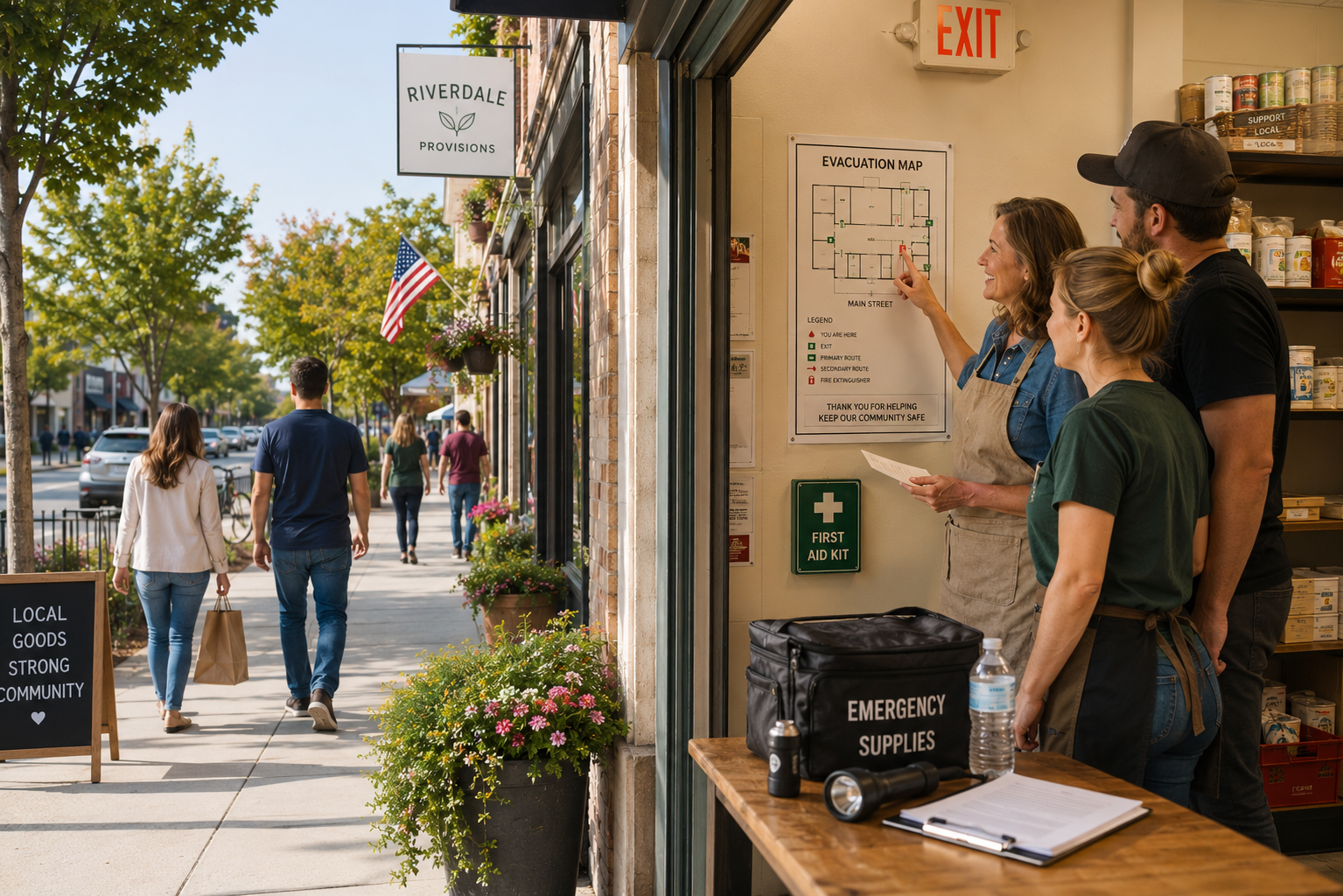
Walk through your workplace and identify what your team would need in an emergency evacuation routes, shelter spots, how you'd contact each other
Complete the checklist below to organize and track key actions that keep employees and customers safe
Train your staff on emergency procedures at least once a year. OSHA's Workplace Emergency Plan Guidance is a useful resource

03 Protect your property & operations
Your equipment, inventory, data, and documents are critical to staying afloat after a disaster. Protective steps now reduce damage and speed recovery.
Do a walkthrough of your space look for equipment that could be damaged by water, wind, fire, or power loss
Use the checklist below to prepare your physical space and digital records for risks that could disrupt operations
Make sure multiple team members know where important systems are and how to access emergency backups
04 Protect your profit
Disasters don't just damage buildings, they disrupt cash flow, payroll, and customer access. Planning ahead helps you survive unexpected revenue loss.
Review your financial records and estimate how much cash you'd need in reserve to stay open or reopen
Complete the checklist below to prepare financially for downtime, relocation, or emergency repairs
Talk to your insurance agent and banker before the risk strikes and look into the SBA's Disaster Loans
05 Communication & continuity
Clear communication keeps employees, customers, and partners informed and prevents confusion from becoming chaos.
Create a simple communication plan for how your team will share updates before, during, and after a disruption
Use the template below to list where your contact info, messaging templates, and backups are stored
Assign roles for who sends customer updates, contacts vendors, or coordinates remote work

Climate resilience matters for small business
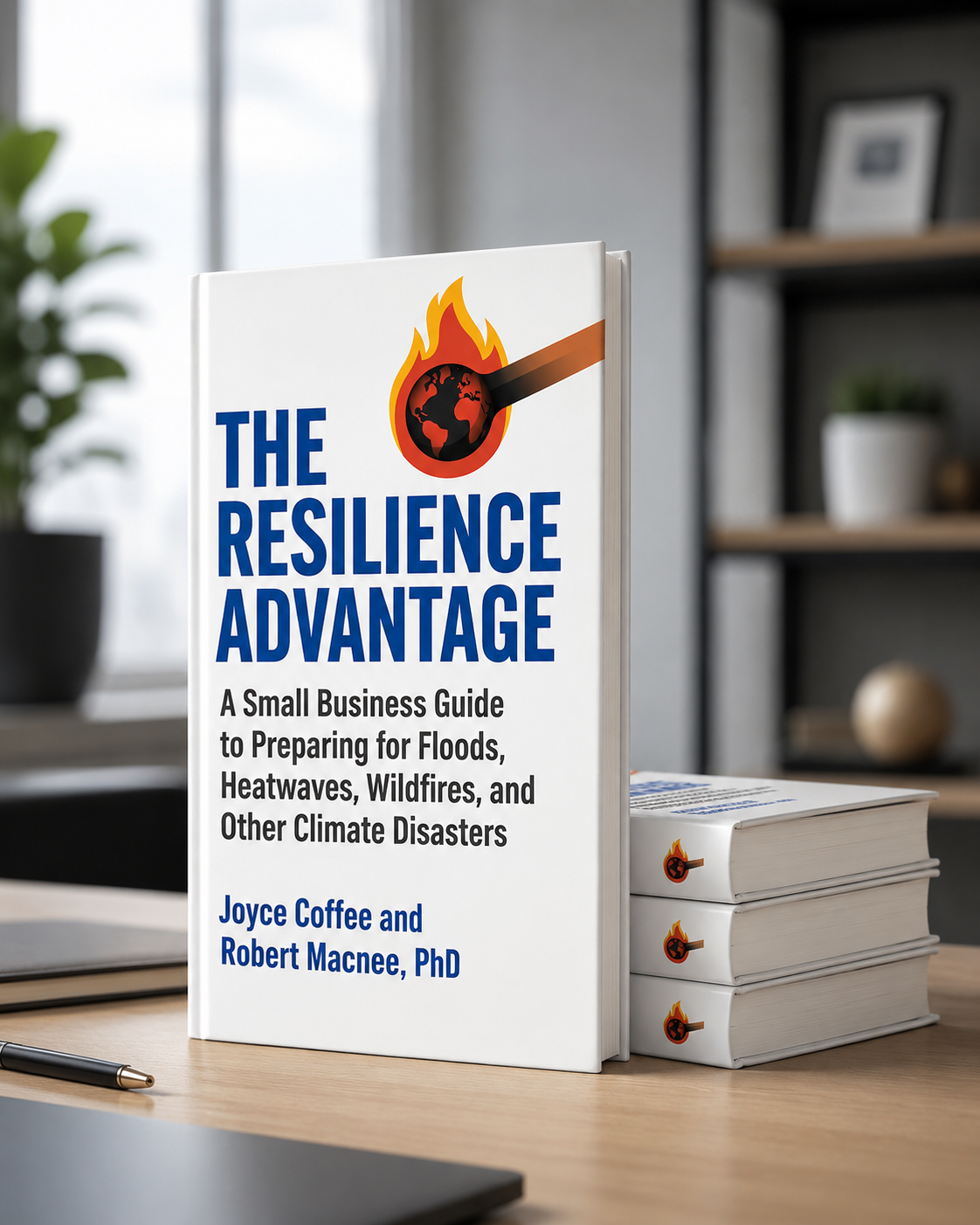
The Resilience Advantage:
A Small Business Guide to Preparing for Floods, Heatwaves, Wildfires, and Other Climate Disasters
Written for American small business owners across all sectors, The Resilience Advantage delivers practical, step-by-step strategies to navigate climate crises protecting people, property, and profits when the unexpected strikes.
The Small Biz Resilience Advantage podcast
A limited-series podcast companion to The Resilience Advantage, exploring how small businesses can prepare for climate impacts from wildfire recovery to heat-proofing storefronts.
Signup for our Newsletter